New
K#RWA
€4.50
€0.23 per pouchSold out
We’re still getting ready
Our webshop is still in the making. All products are currently sold out, and orders and payments are temporarily unavailable.
Journal
Put a can of nicotine pouches next to a can of caffeine pouches and you could easily mix them up. Both are round, both hold around twenty small white pouches, and both are used the same way: one pouch tucked between the gum and the upper lip. That shared format is where the similarity ends. What the pouch delivers, how its strength is written on the can, who it is meant for and how it should be bought are all different.
This guide walks through those differences in plain terms, using the products we actually stock. It is written for adults who already use nicotine, or who want an energy product without nicotine, and want to know exactly which is which before they order.
A nicotine pouch delivers nicotine. A caffeine pouch (often sold as an "energy pouch") delivers caffeine and, in the products we sell, contains no nicotine at all. Everything else — the ingredients around the active substance, the labelling, the age rules and the way you choose a strength — follows from that single difference.
The pouch itself is similar in both products: a small fleece-like bag made from plant-based material, filled with a white powder or granulate. The filling is where they diverge.
A typical tobacco-free nicotine pouch contains:
We look at each of these in more detail in what is inside a nicotine pouch.
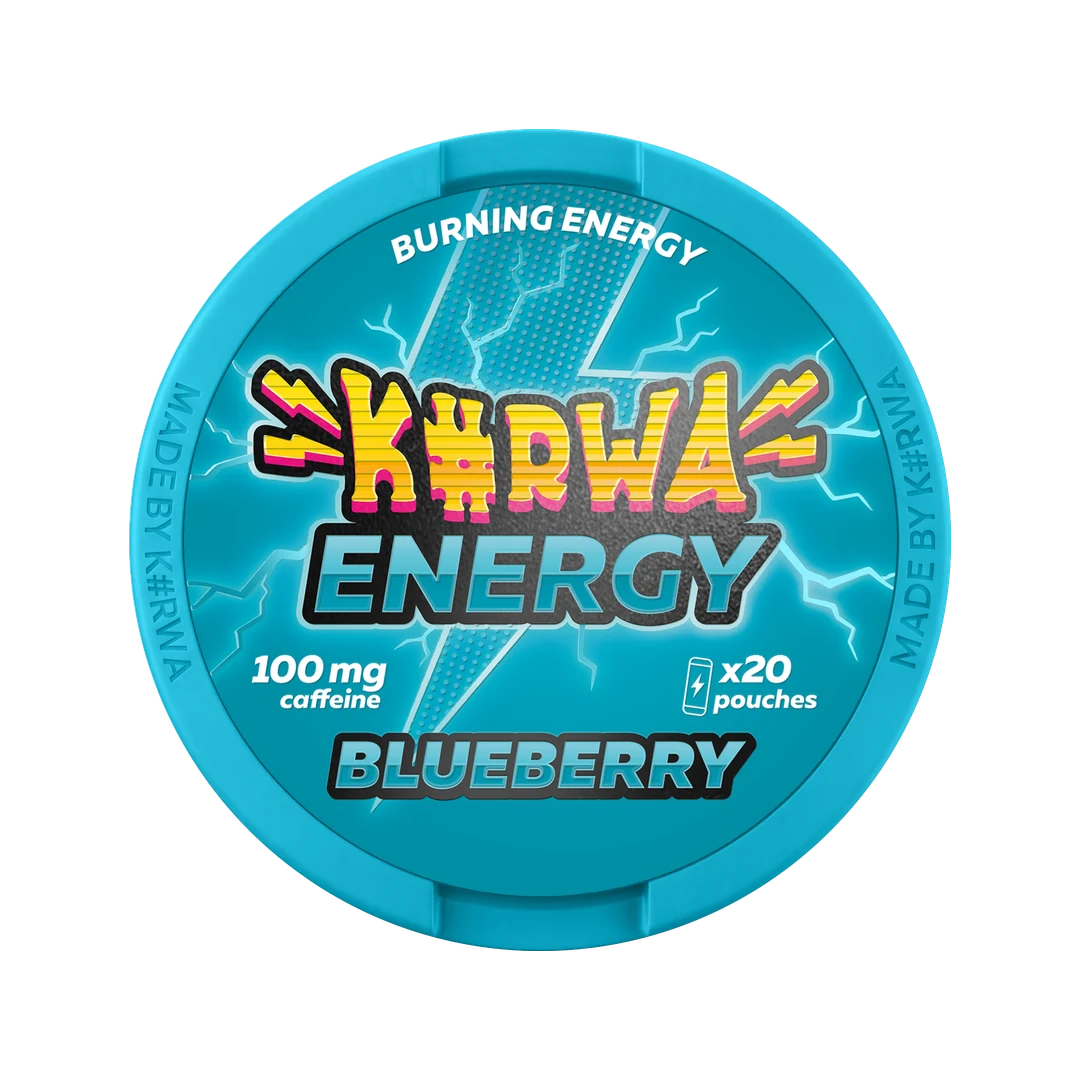
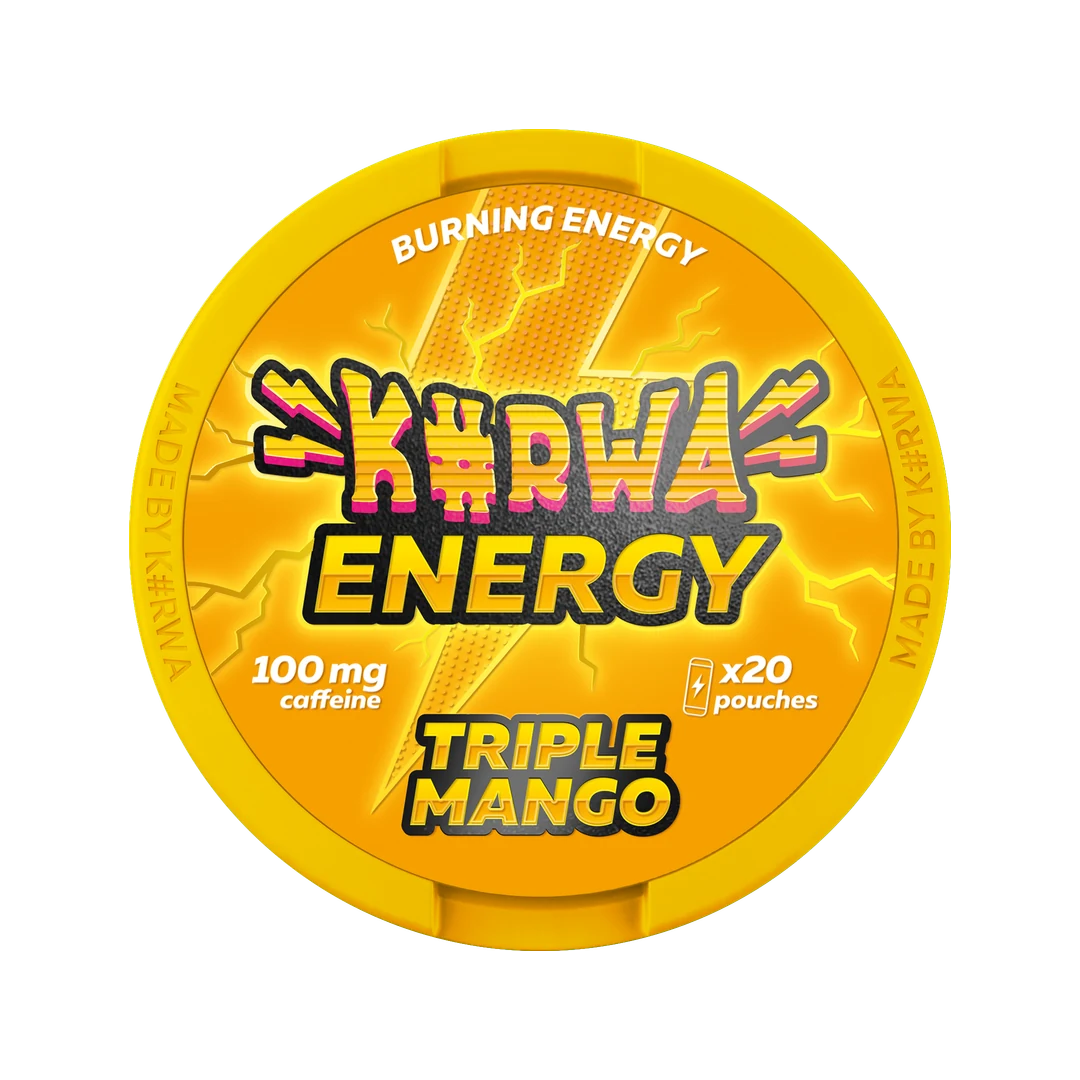
A caffeine pouch swaps nicotine for caffeine and keeps much of the same carrier recipe — filler, moisture, sweetener and flavouring. Some energy pouches add other ingredients that appear in energy drinks; what is in a particular product is printed on its can. The K#RWA Energy pouches we stock state 100 mg of caffeine per pouch and no nicotine, and that is all we claim about them, because it is what the can itself says.
This is the difference that matters most when you are choosing a product, and it is easy to misread.
On a nicotine pouch, strength is given in milligrams of nicotine. You will see two figures:
On our site every nicotine product is sorted and filtered by mg per pouch, never by mg per gram. A CUBA pouch is 43 mg per pouch; its can says 66 mg/g, which is the same pouch described in a different unit. Our explainer on mg per pouch and mg per gram shows the arithmetic with real products.
On a caffeine pouch, strength is milligrams of caffeine per pouch. K#RWA Energy is 100 mg per pouch. Caffeine and nicotine are measured in the same unit but they are different substances with different effects, so the numbers cannot be compared with each other. A 100 mg caffeine pouch is not "stronger" than a 43 mg nicotine pouch in any meaningful sense; they are simply different products.
Both products are used the same way: one pouch under the upper lip, left in place rather than chewed, removed after a while and put in the bin (most cans have a compartment in the lid for used pouches).
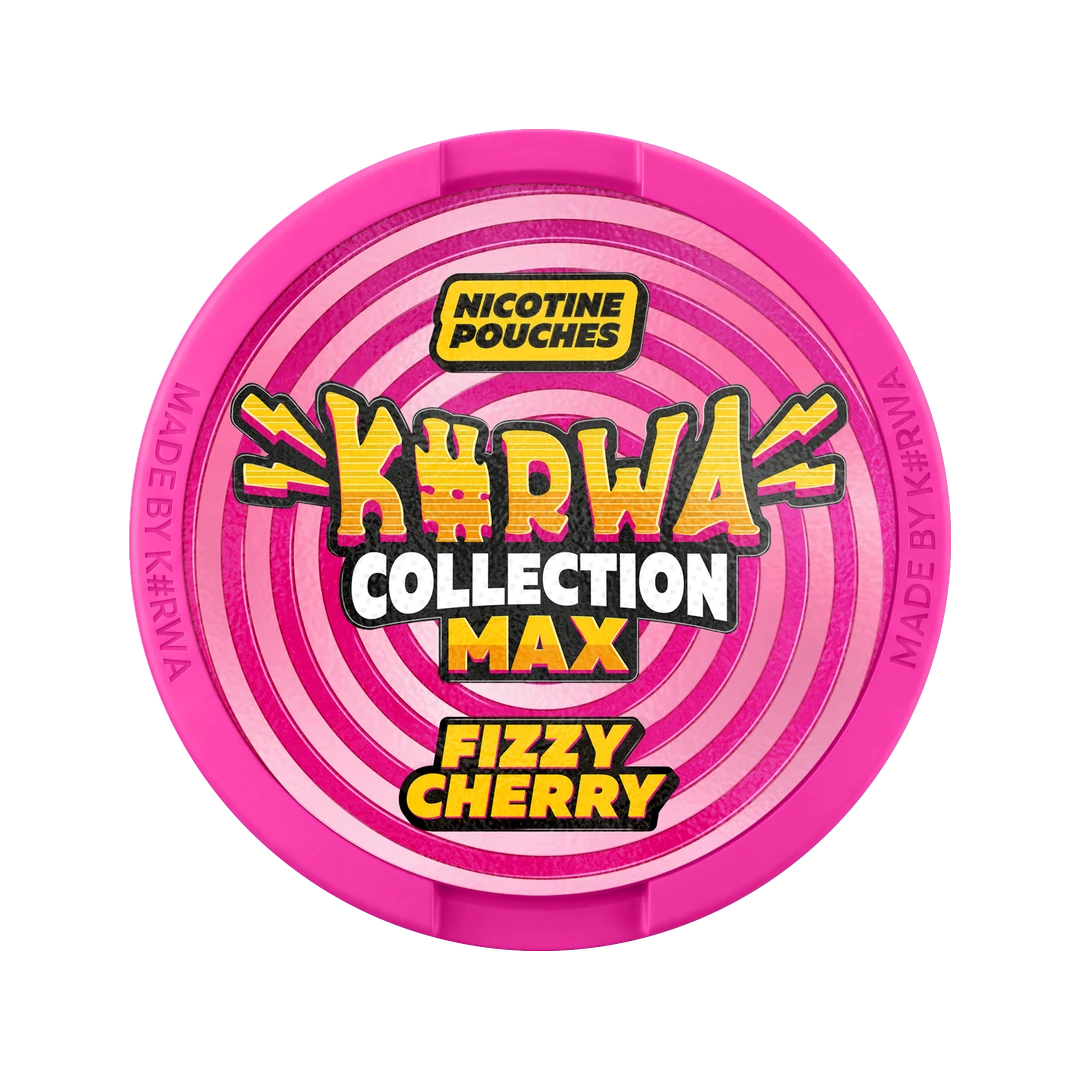
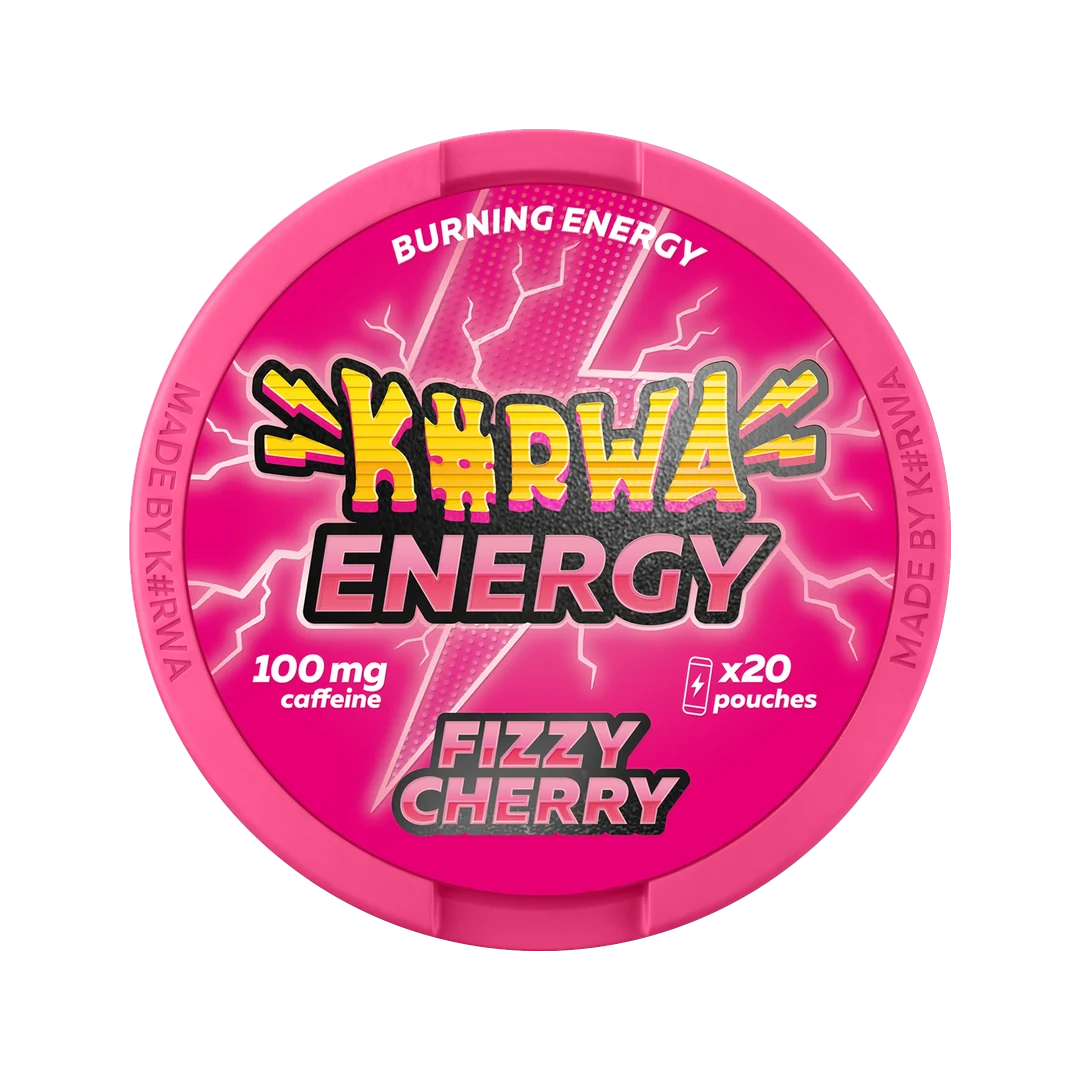
What you notice is different. Nicotine pouches are designed around the sensation nicotine produces — many users describe a tingle or "burn" under the lip, which stronger products make more pronounced. Caffeine pouches are designed around a gradual energy lift similar to the one people know from coffee or energy drinks. Flavour does a lot of the work in both: mint, berry and fruit profiles are common in each category, and the K#RWA Energy line shares its Blueberry, Fizzy Cherry and Triple Mango flavours with K#RWA's nicotine ranges.
Nicotine pouches are for adults who already use nicotine. Nicotine is addictive. Pouches are not a product to start nicotine with, and they are not for anyone under the legal age for nicotine products where they live, for people who are pregnant or breastfeeding, or for anyone advised by a doctor to avoid nicotine. That is why every nicotine product on our site carries an age notice and why age is checked before an order is dispatched. Our age policy explains how.
Caffeine pouches are for adults who want caffeine without nicotine. They suit people who already drink coffee or energy drinks and are comfortable with that amount of caffeine. They are still a concentrated source of caffeine, so they are not suitable for children, and people who are pregnant, breastfeeding or sensitive to caffeine should be careful with them. We sell them to adults only, through the same checkout as everything else.
The European Food Safety Authority (EFSA) concluded in 2015 that, for healthy adults, single doses of caffeine up to about 200 mg and total intakes up to about 400 mg a day do not raise safety concerns; for people who are pregnant the figure is 200 mg a day. One K#RWA Energy pouch at 100 mg is roughly the caffeine in a single espresso or a cup of filter coffee. Two pouches in quick succession reach EFSA's single-dose figure, and four in a day reach the daily one — before counting any coffee, tea, cola or energy drinks you have had. Our caffeine pouch guide goes through this in more detail.
They are separate products, and nothing about the format stops an adult nicotine user from also using a caffeine pouch. If you do, keep track of each substance on its own terms: nicotine per pouch for one, caffeine per pouch for the other. Do not use the two at once to "top up" — the effects are different and stacking them only makes it harder to judge either.
| Nicotine pouch | Caffeine pouch | |
|---|---|---|
| Active substance | Nicotine | Caffeine |
| Strength unit | mg of nicotine per pouch (and mg/g) | mg of caffeine per pouch |
| Tobacco leaf | None ("tobacco-free") | None |
| Who it is for | Adults who already use nicotine | Adults who want caffeine without nicotine |
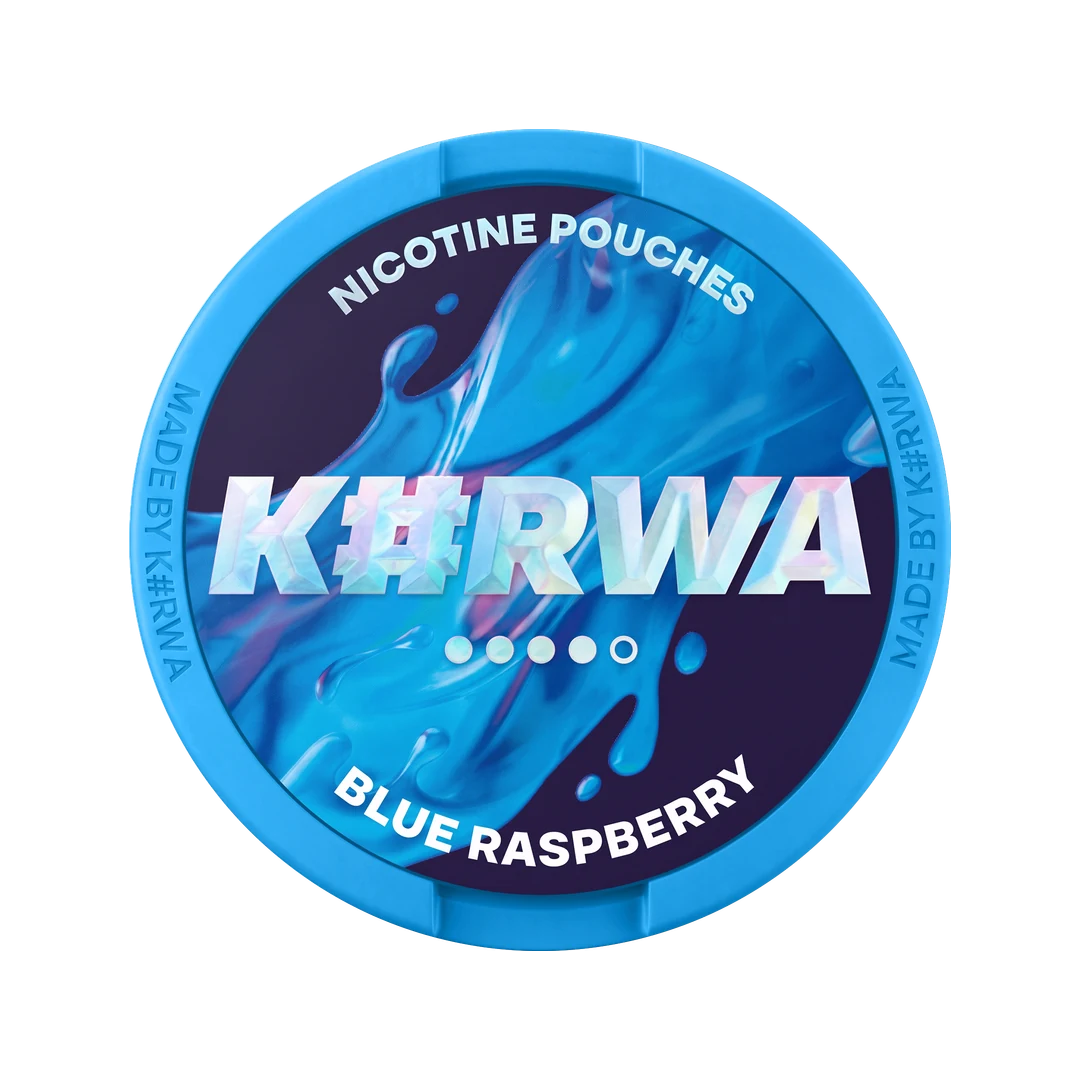
| Example we stock | K#RWA Blue Raspberry, 12 mg nicotine | K#RWA Energy Blueberry, 100 mg caffeine |
| Where to find it | Strength pages and brand pages | Caffeine pouches |
When a can is in your hand, these four checks settle which product it is:
"Energy" does not mean "strong". On a nicotine can, words like "strong" or "extreme" describe nicotine. On an energy pouch, "energy" describes caffeine. Neither tells you how the other product compares.
Flavour does not tell you the category. Blueberry, cherry and mango all exist as nicotine pouches and as caffeine pouches. Choose by the substance first and the flavour second.
Caffeine pouches are not a way to cut down on nicotine. They contain no nicotine, so they do not replace a nicotine product's effect; they are simply a different product. If you are trying to reduce nicotine, lower the mg per pouch of the nicotine product you use — our strength bands make that easy to do in steps.
One pouch is not "one drink". A 100 mg caffeine pouch carries more caffeine than an espresso or a typical 250 ml energy drink. Count it as at least one coffee.
If the can gives a figure in milligrams of nicotine, it is a nicotine product for adult nicotine users, and the number to compare is mg per pouch. If it gives milligrams of caffeine and says nicotine-free, it is an energy product, and the number to keep an eye on is your caffeine for the day. Same shape, same lip, very different contents.
The caffeine pouches we stock, K#RWA Energy, are nicotine-free and state 100 mg of caffeine per pouch on the can. Other brands may differ, so always check the can.
No. Both are given in milligrams, but they are different substances with different effects. Compare nicotine products with each other by mg of nicotine per pouch, and caffeine products by mg of caffeine per pouch.
No. We sell every product, including caffeine pouches, to adults only.
In their own category at /caffeine-pouches/. They never appear in the nicotine strength bands.
Nicotine pouches are intended for adult users only. They should be used responsibly, kept out of reach of children and pets, and never swallowed.
Nicotine per pouch is on every card; the full specification is on each product page.
K#RWA
Sold out
K#RWA
Sold out
K#RWA Berry
Sold out
K#RWA Berry
Sold out
K#RWA Tropical
Sold out
Hi! Ask me about products, strengths, delivery, returns or your order.
Pouch Empire sells tobacco-free nicotine pouches. Nicotine is an addictive substance and these products are intended only for adults who already use nicotine.
The legal age to buy nicotine products is not the same everywhere. Please confirm you are of legal age to buy nicotine products where you live, not simply that you are 18.
You cannot enter this store. Nicotine pouches are not for sale to anyone under the legal age for nicotine products where they live.
By entering you accept our terms, privacy policy and age policy.