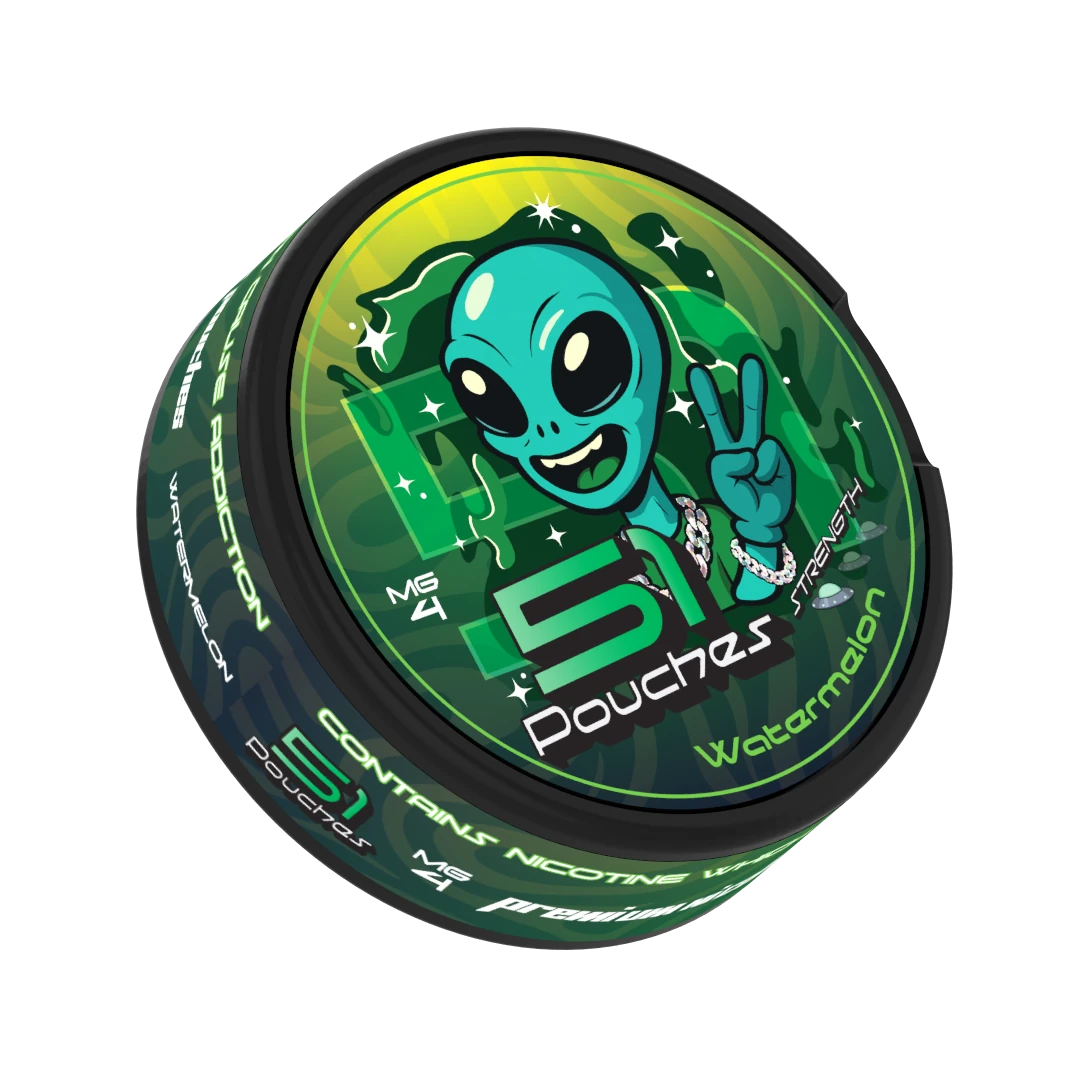
51 Pouches Fruit
€4.50
Sold out
We’re still getting ready
Our webshop is still in the making. All products are currently sold out, and orders and payments are temporarily unavailable.
Journal
"Tobacco-free" tells you what is not in a nicotine pouch. It says less about what is. This guide goes through the ingredients you are likely to see on a can or in a manufacturer's ingredient list, explains what each one is there to do, and points out where products differ from one another.
It is a general guide. Recipes vary between brands and even between flavours from the same brand, and the authoritative list for any product is the one its manufacturer publishes or prints on the can.
Every product starts with the pouch itself: a small, soft, permeable bag that holds the filling and lets moisture, flavour and nicotine pass through. The material is a non-woven fleece, typically made from plant-derived fibres such as viscose. It is what lets the product sit under your lip without the filling spreading, and it is why a used pouch comes out whole.
Pouches are cut and sealed in different shapes. Slim pouches are long and narrow; mini pouches are smaller; larger pouches are wider and hold more filling. We cover what that changes in pouch formats explained.
The active ingredient. In tobacco-free pouches it is added as a purified substance rather than coming from tobacco leaf in the pouch. There are two broad sources:
Nicotine may be added as the free base or as a nicotine salt (nicotine bitartrate is a common one). Manufacturers choose between these for reasons of stability and release. The amount is what the can states as mg per pouch, and its concentration in the filling is what it states as mg per gram; our guide to reading strength explains how the two relate.
Nicotine is addictive, whatever its source and however it is delivered. Pouches are for adults who already use nicotine.
Most of what is in the pouch by weight is filler, which gives the pouch its body and carries everything else. The most common filler is microcrystalline cellulose, a purified form of plant cellulose that is widely used in foods and tablets. Some brands use other plant fibres. The filler is the reason a pouch feels like a pouch rather than a wet powder.
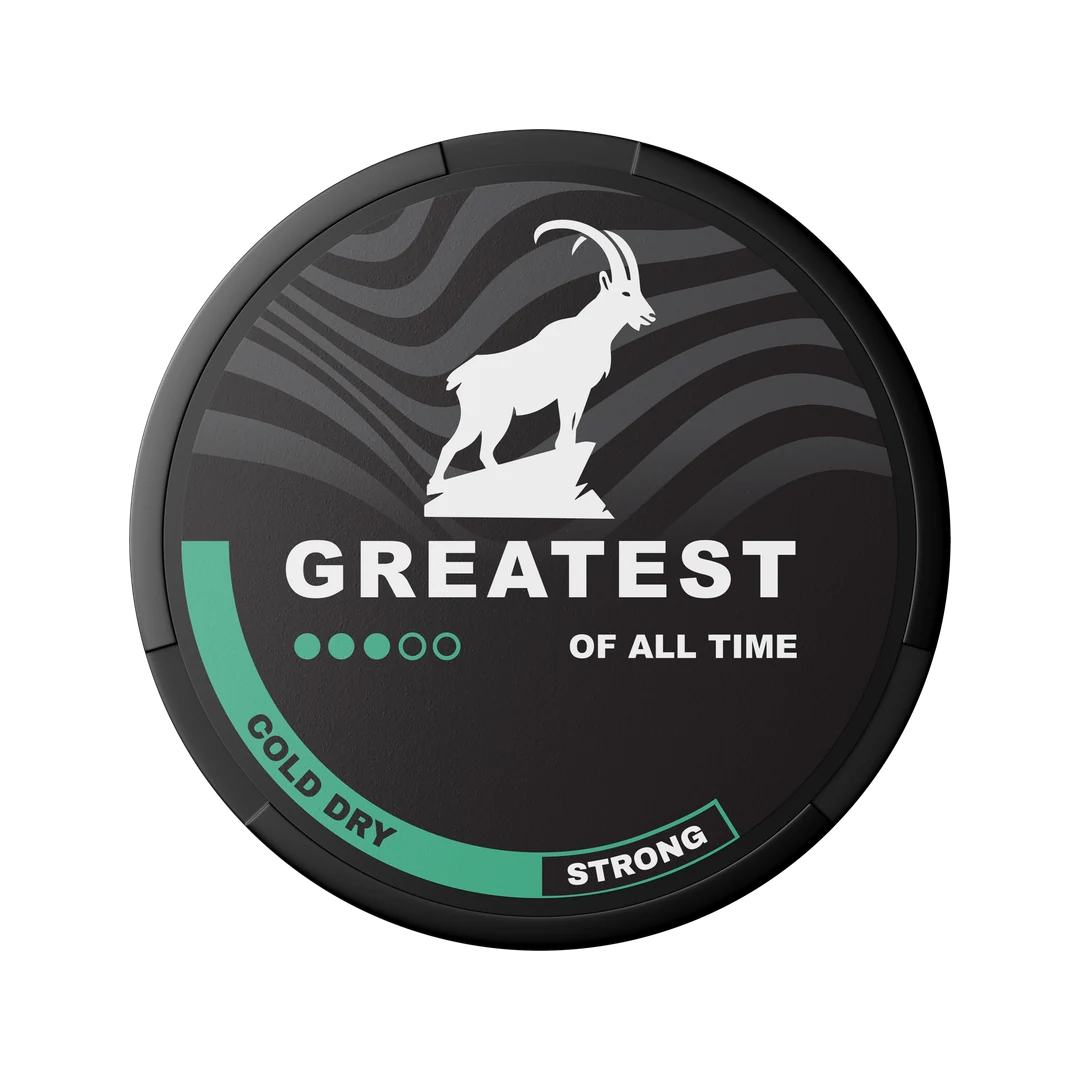
Water sets how moist the filling is. Moisture content is one of the main ways products differ: a moister pouch tends to release flavour and nicotine sooner, while a drier one can feel slower to start and less likely to drip. Brands rarely print an exact moisture figure, but descriptions such as "dry" (Greatest's Cold Dry line is named for it) give you an idea of where a product sits.
You will often see sodium carbonate or sodium bicarbonate on an ingredient list. These raise the pH of the filling slightly, making it more alkaline. Nicotine is absorbed through the lining of the mouth more readily in its unprotonated ("free-base") form, which a higher pH favours. In practice this is one reason two pouches with the same mg per pouch can feel different: the one with a higher pH may be felt sooner.
Pouches are usually sweetened with high-intensity sweeteners rather than sugar, because only a tiny amount is needed and sugar would add stickiness and moisture. Acesulfame K and sucralose are common. Sweetness levels vary a lot between brands; some fruit and candy profiles are clearly sweet, while many mint products keep sweetness low.
Flavour is what most people actually choose a pouch by. Flavourings are added in small amounts and are listed simply as "flavourings" or "aromas" on most cans. The same named flavour can taste quite different between brands, because each one builds it its own way: compare the many takes on mint in our mint range or on berry in our berry range. Cooling agents are often used in "ice", "frost" or "freeze" products to add a cold sensation beyond what mint alone gives.
A humectant keeps the filling from drying out once the can is opened. Propylene glycol and glycerol (also written glycerine) are the usual ones. They are also common in foods and cosmetics.
Some recipes include a little sodium chloride (table salt) for taste, and a stabiliser or binder such as a cellulose derivative to help the filling hold together. These appear near the end of an ingredient list, which by convention is ordered from the largest to the smallest amount.
| Ingredient (as often written on a list) | What it does | Notes |
|---|---|---|
| Nicotine, nicotine bitartrate, nicotine salt | The active substance | Amount stated as mg per pouch and/or mg/g |
| Microcrystalline cellulose, plant fibres | Filler and body | Usually the largest ingredient by weight |
| Water | Sets moisture | Affects how soon a pouch is felt |
| Sodium carbonate, sodium bicarbonate | pH adjusters | Influence how readily nicotine is released |
| Acesulfame K, sucralose | Sweeteners | Tiny amounts; no sugar in most products |
| Flavourings, aromas | Taste | Cooling agents often in "ice" and "freeze" products |
| Propylene glycol, glycerol | Humectants | Keep the filling from drying out |
| Sodium chloride | Salt, for taste | Small amount |
| Hydroxypropyl cellulose and similar | Binder or stabiliser | Helps the filling hold together |
Not every product contains every item; this is the common vocabulary, not a recipe.
If the list on a can is incomplete or unreadable, the manufacturer's website is the next place to look, and our contact form reaches a person if you cannot find it.
Both are nicotine. Nicotine from tobacco is almost entirely one mirror-image form of the molecule (S-nicotine), while synthetic nicotine can be a mixture of the S and R forms, depending on how it is made. The source can also matter for regulation — some countries treat synthetic and tobacco-derived nicotine differently — and some users have a preference. For the user, the main driver of strength is still the amount per pouch and how quickly it is released. If a product's source matters to you, check the can or the maker's information; it is not always stated.
"All white" describes appearance: the pouch and filling are white because there is no brown tobacco leaf in them. It is not a measure of strength or quality. "Tobacco-free" means there is no tobacco leaf, but the nicotine may still be tobacco-derived. Both terms are about the filling, not about how strong the product is.
If you line up the ingredient lists of two products, the names are often almost the same. What actually differs is:
That is why we show strength per pouch, format and flavour family on every product page, and why the product description is worth reading before ordering.
For any specific product, the manufacturer's own information is the authority. Ingredients are printed on the can or its packaging, and many manufacturers publish full lists online. If you need to avoid a particular ingredient, check that list rather than relying on a general guide like this one, and contact us if a can's information is unclear — the contact form reaches a person.
No tobacco leaf. Tobacco-free pouches contain purified nicotine, which may be tobacco-derived or synthetic, together with a plant-based filler, water and flavourings.
It is a pH adjuster. A slightly alkaline filling lets nicotine be absorbed through the lining of the mouth more readily, which affects how quickly a pouch is felt.
Most are sweetened with small amounts of high-intensity sweeteners such as acesulfame K or sucralose rather than sugar. Check the can for the exact list.
No. "All white" only describes the colour of the pouch and filling. Strength is the mg of nicotine per pouch printed on the can.
Nicotine pouches are intended for adult users only. They should be used responsibly, kept out of reach of children and pets, and never swallowed.
Nicotine per pouch is on every card; the full specification is on each product page.
51 Pouches Fruit
Sold out
Greatest Mint
Sold out
KLINT
Sold out
Sold out
Hi! Ask me about products, strengths, delivery, returns or your order.
Pouch Empire sells tobacco-free nicotine pouches. Nicotine is an addictive substance and these products are intended only for adults who already use nicotine.
The legal age to buy nicotine products is not the same everywhere. Please confirm you are of legal age to buy nicotine products where you live, not simply that you are 18.
You cannot enter this store. Nicotine pouches are not for sale to anyone under the legal age for nicotine products where they live.
By entering you accept our terms, privacy policy and age policy.